Statehouse Republicans’ Latest Attack on Workers’ Rights and Why It Must Be Stopped
In a brazen and shameless move that threatens the very foundation of workers’ rights in Ohio, Statehouse Republicans are ruthlessly pushing forward with a series of bills aimed at dismantling union power. These bills, including Senate Bills 1 and 8, are nothing short of an underhanded attempt to revive the infamous 2011 overhaul of public unions, which was soundly rejected by Ohioans.
The language of these bills is carefully crafted to appear benign, but make no mistake—these measures are designed to strip workers of their collective bargaining rights and obliterate the power of unions. Senate Bill 1, for example, claims to “protect taxpayer dollars” and “improve student learning,” but in reality, it seeks to undermine the ability of public sector unions to negotiate fair wages and working conditions. Senate Bill 8, similarly, is framed as a measure to “drive economic growth,” yet its true intent is to erode the hard-won rights of Ohio’s workers.
Senate Bill 1, also known as the “Enact Advance Ohio Higher Education Act,” passed in the Ohio Senate on February 12, 2025, with a 21-11 vote. The bill, introduced by State Senator Jerry C. Cirino, aims to reshape higher education in Ohio by eliminating diversity, equity, and inclusion efforts, changing how universities can instruct and endorse certain topics, and prohibiting faculty from striking. Following its passage in the Senate, the bill was introduced in the Ohio House on February 18, 2025, and referred to the House Workforce and Higher Education Committee on February 26, 2025. If the bill passes in the House, it will be sent to Governor Mike DeWine for his approval or veto. If signed into law, the bill will significantly impact Ohio’s higher education system, promoting free speech and diversity of thought while banning DEI programs and mandatory training.

The passage of Senate Bill 1 sparked significant student protests across the state. At the University of Cincinnati, hundreds of students, staff, and community leaders gathered to protest the proposed rollback of diversity, equity, and inclusion (DEI) initiatives. Similarly, over a thousand Ohio University students walked out of class to demand transparency from university leadership regarding the potential impact of the new laws on DEI programs. These protests highlight the strong opposition among students and faculty to the changes proposed by Senate Bill 1.
Senate Bill 8, introduced by State Senator Stephen A. Huffman, aims to prohibit paid public employee leave for certain union activities. The bill was introduced in the Ohio Senate on January 22, 2025, and referred to the Senate Government Oversight and Reform Committee on January 29, 2025. The bill successfully passed the Senate and is now awaiting consideration in the Ohio House. If it passes in the House, it will be sent to Governor Mike DeWine for his approval or veto. If signed into law, the bill will significantly impact public employees’ ability to engage in union activities during paid leave.
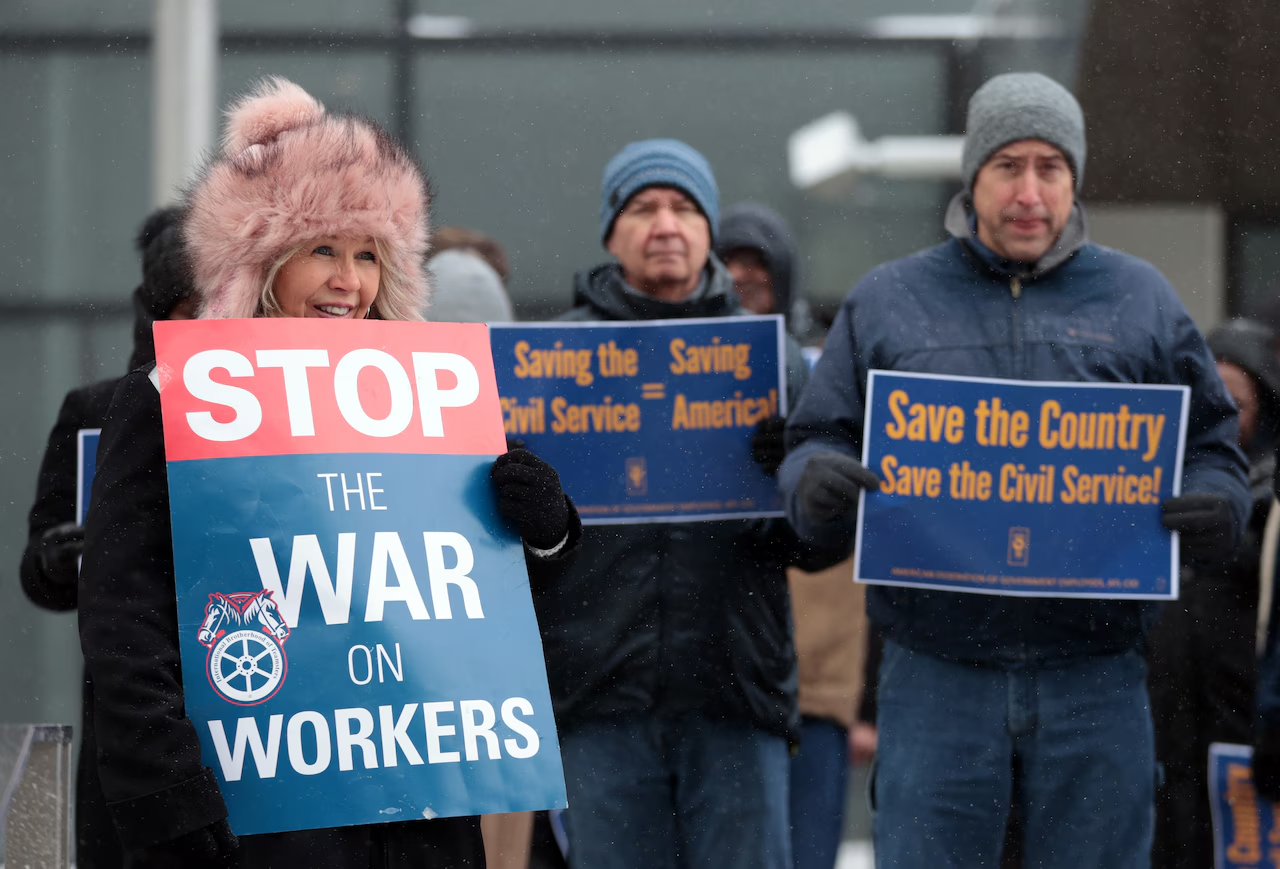
The introduction of Senate Bill 8 has sparked significant opposition from union leaders and public employees across the state. Protests have erupted at various public institutions, with employees and union representatives voicing their concerns about the potential impact of the bill on workers’ rights and union activities. These protests highlight the strong opposition to the changes proposed by Senate Bill 8 and the determination of public employees to protect their rights.
Union leaders across the state are sounding the alarm. House Minority Leader Allison Russo, a Columbus-area Democrat, has been vocal in her opposition, stating, “These bills set Ohio on a piecemeal path to accomplishing what former Governor John Kasich couldn’t with Senate Bill 5: Gut the powers of public unions.” This sentiment is echoed by countless union representatives who see these bills as a direct attack on the middle class and a blatant attempt to weaken the collective voice of workers.
Senate Bills 1 and 8, though not explicitly making Ohio a “Right to Work” state, are part of a broader legislative effort that aligns with the principles of “Right to Work” laws, which aim to weaken the power of unions and reduce collective bargaining rights. These bills contribute to the overall goal of diminishing union influence and worker protections, setting the stage for a future where unions have less sway and workers face fewer protections.
Senate Bill 1, by eliminating diversity, equity, and inclusion efforts and prohibiting faculty from striking, directly undermines the ability of public sector unions to advocate for fair wages, working conditions, and other essential benefits. This erosion of union power is a significant step toward creating an environment where unions have less influence and workers have fewer protections. Similarly, Senate Bill 8, which prohibits paid public employee leave for certain union activities, targets the ability of public employees to engage in union activities during paid leave. Having passed the Ohio Senate, the bill is now awaiting consideration in the Ohio House. By restricting union activities, this bill weakens the collective bargaining power of public employees and makes it more difficult for unions to effectively represent their members. Together, these bills contribute to a legislative landscape that aligns with “Right to Work” principles by weakening unions and reducing worker protections, ultimately moving Ohio closer to becoming a “Right to Work” state.
The consequences of these bills, if passed, would be catastrophic for Ohio workers. Research has consistently shown that “Right to Work” laws lead to lower wages, reduced benefits, and poorer working conditions. States with such laws on the books have higher rates of workplace safety violations and fatalities compared to states without them. By weakening unions, these bills would strip workers of their ability to negotiate for fair pay, safe working conditions, and essential benefits.
Ohioans must stand united against this assault on workers’ rights. The fight against these bills is not just about protecting unions—it’s about safeguarding the dignity and well-being of every worker in the state. As Martin Luther King Jr. once said, “In our glorious fight for civil rights, we must guard against being fooled by false slogans, such as ‘right-to-work.’ Its purpose is to destroy labor unions and the freedom of collective bargaining.