Rep. Brandon Gill’s proposal to put Trump’s face on the $100 bill threatens the foundations of American democracy and echoes the tactics of autocratic regimes.
The proposal to put Donald Trump’s face on the $100 bill is a chilling reminder of the tactics used by autocratic dictators throughout history. The Golden Age Act of 2025, introduced by Rep. Brandon Gill (R-Texas) on March 3, 2025, is not just a harmless tribute to a former president; it is a dangerous step towards authoritarianism that should alarm every American who values democracy and freedom.
Historically, the practice of placing living political figures on currency has been a hallmark of autocratic regimes. Julius Caesar and Augustus used coins to reinforce their authority and divine right to rule. In modern times, leaders like Saddam Hussein and Muammar Gaddafi have featured their own images on currency as a means of propaganda and control. These leaders used their likeness on currency to cement their power and create a cult of personality, often at the expense of democratic principles and individual freedoms.
In democratic societies, the honor of being featured on currency is reserved for deceased presidents and historical figures who have made significant contributions to the nation. Federal law, specifically 31 U.S. Code § 5114(b), prohibits the depiction of living persons on U.S. currency. This tradition ensures that currency remains a symbol of national unity and shared values, rather than a tool for political propaganda.
Rep. Gill’s proposal to put Trump’s face on the $100 bill is a blatant attempt to rewrite this tradition and elevate Trump to a status reserved for the most revered figures in American history. It is a move that smacks of authoritarianism and threatens to undermine the very foundations of our democracy. This can be viewed as “golden idol” style worship of a political leader, reminiscent of the tactics used by autocratic dictators to maintain control and suppress dissent.
Trump’s first term was marked by a series of actions that eroded democratic norms and institutions. From his attacks on the free press to his attempts to undermine the integrity of the electoral process, Trump demonstrated a willingness to subvert democratic principles for his own gain. This new measure is just the latest in a series of alarming steps that signal a slide towards authoritarianism.
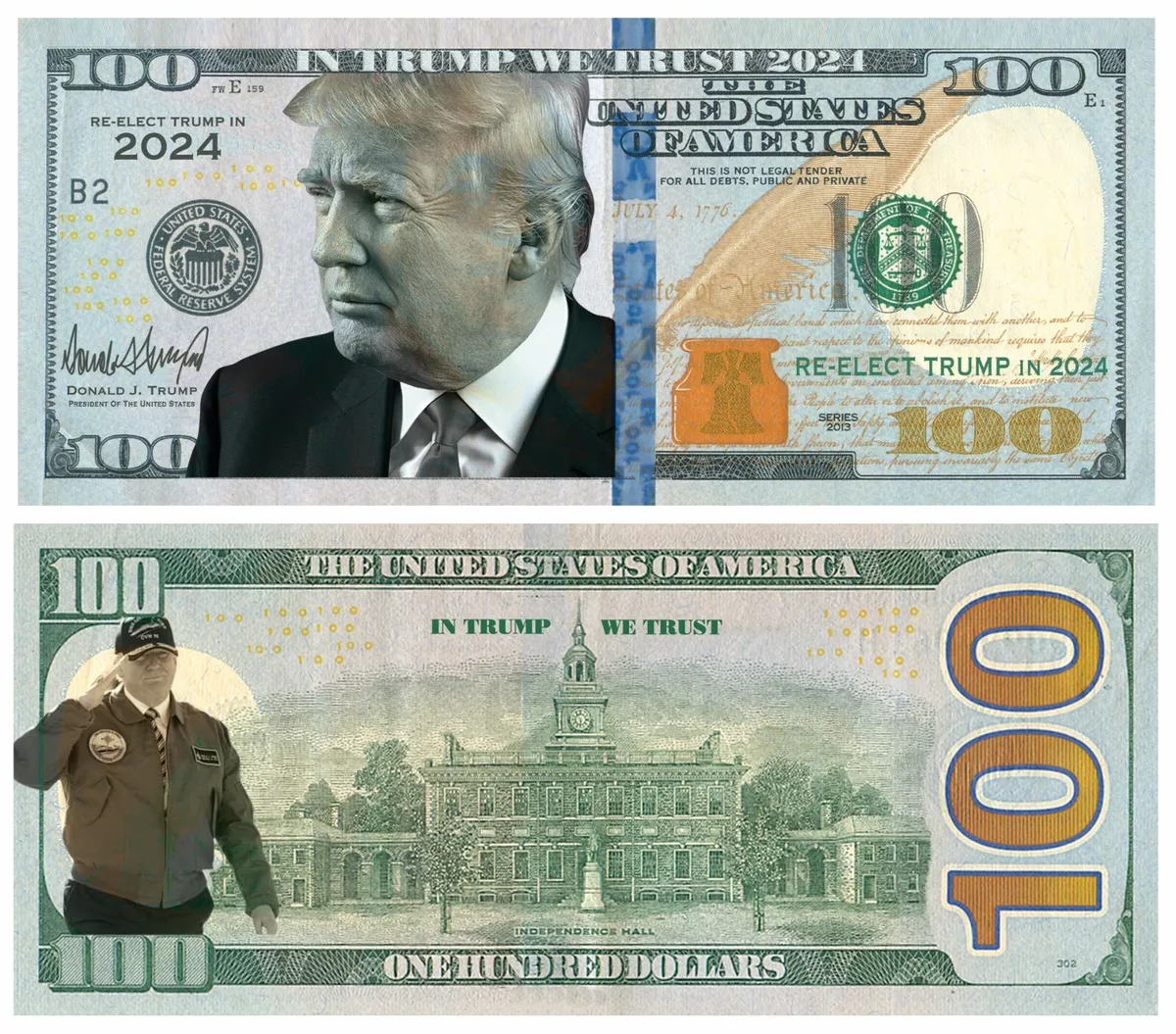
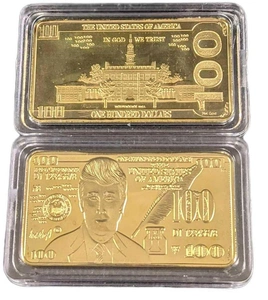
Adding to the controversy, Trump-themed fake $100 bills have been sold as novelty items, featuring his face in place of Benjamin Franklin’s and the phrase “In Trump We Trust” instead of “In God We Trust”. These bills have been used in various promotional items and auctions, including a sculpture covered in these fake bills displayed at Mar-a-Lago. While the exact amount Trump has enriched himself from these novelty items is not publicly disclosed, it is clear that they have been a lucrative venture, with numerous products available for purchase online.
The implications of this proposal are far-reaching. It sets a dangerous precedent that could pave the way for future leaders to use currency and other national symbols as tools for political propaganda. It undermines the principle that currency should be a symbol of national unity, not a platform for political agendas.
While the bill is unlikely to gain significant traction in Congress as it has faced strong opposition from both sides of the political spectrum, it highlights the shocking level of sycophancy many Trump supporters have reached. We must stand in staunch opposition to this dangerous idea. Contact your elected officials in Congress and demand that they uphold the principles of democracy and resist any attempts to subvert them for political gain. Our democracy depends on it.