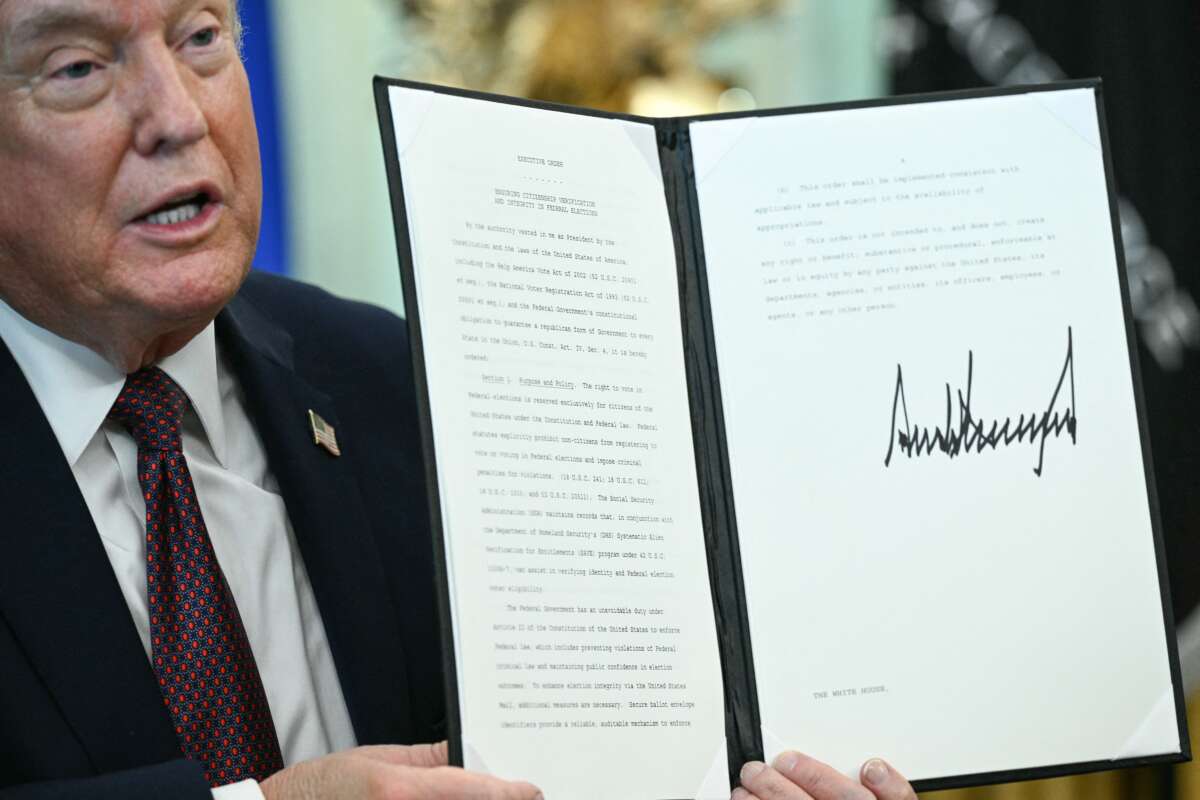
I dig into the “Big Beautiful Bill” that’s bulldozing our healthcare and leaving working-class families exposed.
I read the bill. Here’s my analysis.
For decades, working-class Americans have depended on Medicaid as a vital lifeline—a promise repeatedly touted by conservative leaders and even Trump himself, who assured the nation that “we won’t touch Medicaid, Medicare, or Social Security.” In real life, that promise meant hope: a guarantee that even in the face of financial hardship, families would have access to affordable healthcare. But the new bill tells a very different story.
Consider the stark language of Section 112103:
“DISALLOWING PREMIUM TAX CREDIT DURING
PERIODS OF MEDICAID INELIGIBILITY DUE
TO ALIEN STATUS.”
In plain terms, this provision means that if you lose Medicaid coverage—even temporarily—because your immigration status doesn’t meet an arbitrary technical benchmark, you also lose the premium tax credit designed to subsidize your insurance premiums. For a working parent meticulously balancing rent, food, and utilities, this isn’t just a bureaucratic tweak—it’s a direct hit to an already fragile budget. The premium tax credit isn’t a nice-to-have; it’s the very mechanism that keeps healthcare costs within reach for millions of families.
The fallout from this policy is immediate and brutal. Imagine a scenario where a minor gap in Medicaid eligibility—perhaps due to complex or shifting immigration regulations—triggers an abrupt removal of the crucial subsidy. Without that help, insurance premiums could suddenly become astronomical, forcing families into impossible choices: delay necessary medical treatment to avoid crushing debt, or risk financial ruin by paying full price for healthcare. This isn’t an abstract concern; it’s a concrete threat to the well-being of everyday Americans, many of whom are already teetering on the edge of financial insecurity.
The implications extend even further when we consider state-level dynamics. In many states—Ohio is a prime example—Medicaid trigger laws are in place to automatically tighten eligibility or force benefit reviews if enrollment dips below set thresholds. The moment these new federal rules cause a temporary drop in Medicaid enrollment, the trigger laws could spring into action, accelerating state-level cuts and further destabilizing what little coverage families have. What should be a safety net ends up becoming a ticking time bomb, where a brief administrative setback can cascade into full-blown benefit rollbacks.
The bottom line is this: the promises once broadcast from campaign stages are being dismantled piece by piece. Instead of expanding access, these Medicaid cuts effectively punish families for technicalities, leaving behind a landscape where millions feel abandoned by the system they helped build. Working-class Americans are now staring down the barrel of policies that, under the guise of reducing fraud or saving money, will strip away the very support that keeps them healthy and whole.
For millions who depend on Medicare as a lifeline, the new bill doesn’t promise safety—it promises a reckoning. Section 112104 throws down a gauntlet, stating that to be eligible for Medicare, an individual must meet an exacting list of requirements. The bill inserts a new section that reads:
“an individual may be entitled to, or enrolled for, benefits under this title only if the individual is—
(1) a citizen or national of the United States;
(2) an alien who is lawfully admitted for permanent residence under the Immigration and Nationality Act;
(3) … [further narrow stipulations apply].”
In everyday language, what does this mean? One year after the law takes effect, every Medicare beneficiary—no matter how long they’ve paid into the system or how many times they’ve depended on it—will be subject to a strict review. If you don’t neatly fit into the narrow definitions, a minor technicality related to immigration status could trigger the termination of your Medicare benefits. For working-class seniors and disabled Americans, many of whom have spent decades contributing to this very program, this isn’t a friendly cleanup—it’s a cold, calculated cull that puts life-saving healthcare on the chopping block.
The implications are brutal. Imagine a senior who has faithfully paid taxes and relied on Medicare for routine and emergency care suddenly faced with the reality that a “technical” error in documentation or an outdated immigration record means they will lose their benefits. This is not just administrative rehashing—it’s a direct strike against those living on fixed incomes, forcing them into a state of precarious insecurity as they scramble to replace benefits they had every right to expect. It’s a policy move that transforms Medicare from a promise of lifelong care into a precarious entitlement that can vanish overnight.
But the assault on Medicare doesn’t stop with eligibility restrictions. Section 112204 introduces an entirely new layer of oversight by mandating the use of artificial intelligence tools to monitor Medicare payments. The bill requires that by January 1, 2027, the Secretary implement AI systems designed to reduce so-called “improper payments” made under Medicare Parts A and B. While billed as a measure to reduce fraud, the reality is far more sinister. In plain terms, this directive means every Medicare claim becomes subject to the unfeeling judgment of algorithms—tools that lack the nuance and empathy needed to assess the complexities of healthcare billing.
The danger here is twofold. First, even a tiny, honest mistake on a claim could trigger an automated flag, leading to delayed care or even a demand to repay funds already paid. Second, these AI-driven reviews turn the whole process into a game of chance for seniors and disabled individuals, whose savings are already meager. The result? A system that punishes genuine, desperate need with the cold calculus of technology—a system that, rather than protecting individuals, squeezes them further by threatening to unbalance their fragile financial stability.
In essence, these Medicare provisions expose a harsh reality: after years of assurances that “Medicare will never be touched,” the bill now slices away at benefits piece by piece, subjecting the most vulnerable to endless reviews and algorithmic reckonings. For working-class Americans who have depended on Medicare all their lives, the transformation is nothing short of a betrayal—a policy that trades certainty and security for the promise of fiscal “efficiency” at the expense of human dignity.
For working-class Americans, the combined Medicaid and Medicare provisions are not merely administrative adjustments—they are the culmination of a betrayal that undermines the very promise of a social safety net. These policies, which strip away premium tax credits during brief episodes of Medicaid ineligibility and impose draconian eligibility criteria on Medicare beneficiaries, have far-reaching consequences that reach deep into our communities.
When a person loses Medicaid coverage—even momentarily—the loss of the premium tax credit translates directly into a heavier financial burden. In states like Ohio, where Medicaid trigger laws are in effect, an already fragile system can be pushed over the edge. A temporary drop in enrollment doesn’t stay confined to paperwork; it triggers state-level cuts that force hundreds of thousands of families to abruptly lose coverage. The result is an immediate and catastrophic rise in out-of-pocket costs and medical debt—a scenario where a missed doctor’s appointment or a brief lapse in eligibility can set off a cascade of financial ruin.
Similarly, the reckless narrowing of Medicare eligibility and the deployment of artificial intelligence tools for scrutinizing claims place an unbearable amount of risk on some of our most vulnerable citizens—our seniors and disabled populations. Years of reliable benefits and predictable support will soon be jeopardized by cold, impersonal algorithms and technical reviews that reduce long-term care to a roll of bureaucratic dice. The everyday American, counting on Medicare as assurance against medical and financial catastrophe, is staring at an uncertain future where a technical error or outdated record might strip them of their deserved benefits overnight.
Ultimately, these policy measures amount to a systematic dismantling of historic promises. For decades, the American working class was led to believe that Medicaid, Medicare, and Social Security were untouchable. Now, under the guise of cost-cutting and fraud prevention, we are witnessing the disintegration of that very promise. The decisions made by lawmakers will leave millions exposed—not only to devastating financial repercussions but also to a healthcare system that no longer prioritizes human needs over numbers on a balance sheet.
This cascading assault on our safety nets is more than just policy reform—it’s an assault on dignity, trust, and our community’s well-being. It is high time that the promises of the past are held accountable, and that working-class Americans demand a system that protects rather than punishes its most vulnerable citizens. The stakes couldn’t be higher, and the cost couldn’t be more personal.
Did you enjoy this article? If so, please make sure to Like, Comment, and maybe even share it with your friends & family. If you’re not already subscribed, please consider subscribing. It’s ALWAYS free!
About the Author

Josh Schooley is a seasoned accountant and business management professional with over 25 years of experience, but his passion for truth and transparency extends far beyond numbers. As the founder of The Pulse Network, Josh has built a reputation for delivering fact-based political analysis and cutting through misinformation in an era of spin.
A proud husband, father, and grandfather, Josh uses his platform to advocate for LGBTQ+ rights, social justice, and progressive policies. His presence on Threads has become a hub for sharp political commentary, where he engages with thousands of followers, exposing hypocrisy and holding leaders accountable.
Josh is also an active member, special consultant, and Treasurer for The Mayday Coalition Project, a non-profit, grassroots organization and Ohio 501(c)(4) dedicated to fighting for democracy, equity, and meaningful change at the local level. Through his work with Mayday, he helps strategize campaigns, mobilize activists, and push for policy reforms that protect fundamental rights.
Josh’s work has resonated with readers who seek clarity, honesty, and a no-nonsense approach to politics. Whether he’s dissecting the latest policy shifts or calling out political corruption, his voice remains a powerful force in the fight for democracy and equality.