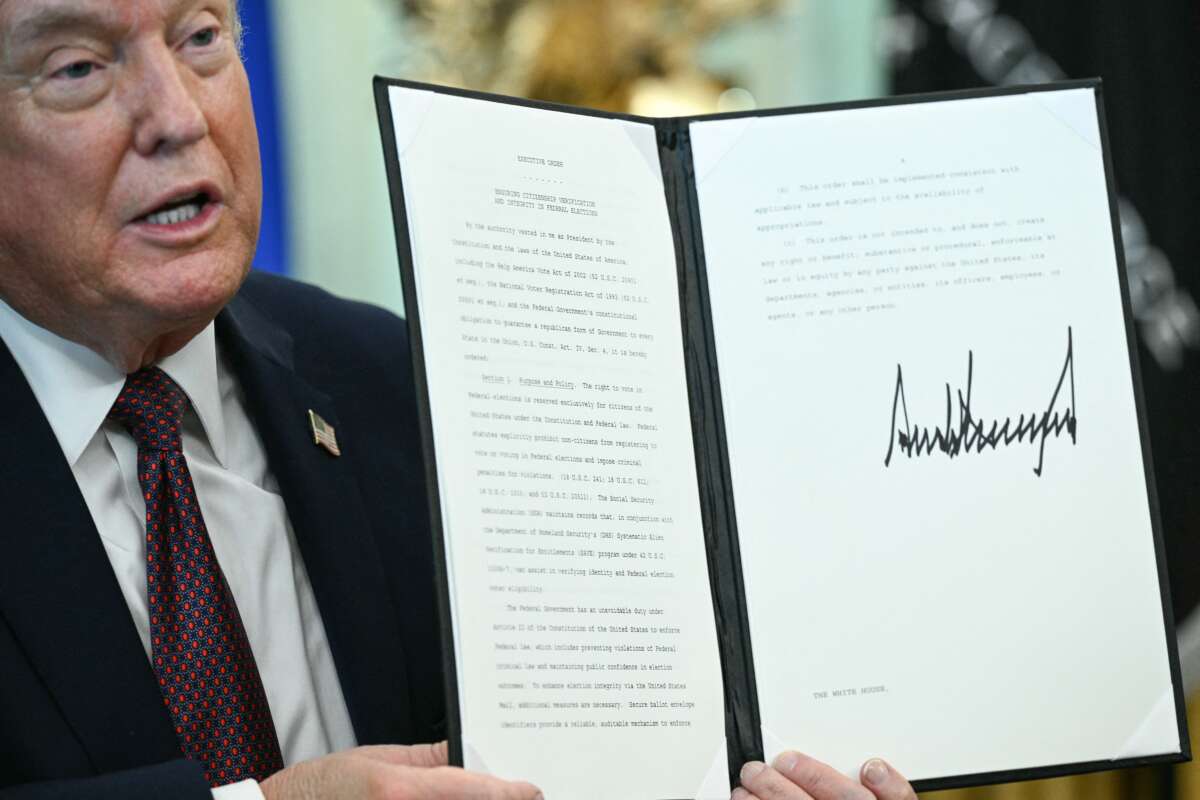
They found a trillion for the Pentagon and a billion a day for Iran. But healthcare for every American? That’s where they draw the line. The math says they’re lying.
Let’s start with the number they don’t want you to hear: $5.3 trillion. That’s how much the United States spent on healthcare in 2024, according to the Centers for Medicare and Medicaid Services. That’s $15,474 per person. That’s 18% of the entire GDP. We already spend more on healthcare than any nation on earth, by a staggering margin, and we still leave tens of millions of people uninsured or underinsured.

Every time Medicare for All comes up, the same chorus starts: “How are you going to pay for it?” “We can’t afford it.” “It’s too expensive.” And every single time, the people saying it refuse to acknowledge what we’re already paying or what we somehow always manage to find money for.
So in this article, I’m going to tackle and talk about what America can apparently afford.
A Trillion-Dollar Military (Before the War Even Started)
The FY2026 Pentagon base budget is $858.9 billion in appropriated funds. On top of that sits an additional $151 billion in reconciliation funding that the Pentagon now plans to spend entirely in a single fiscal year, a departure from the original plan to spread it over five years. Combined with Department of Energy nuclear programs and other defense-adjacent spending, total national defense spending surpasses $1 trillion for FY2026.
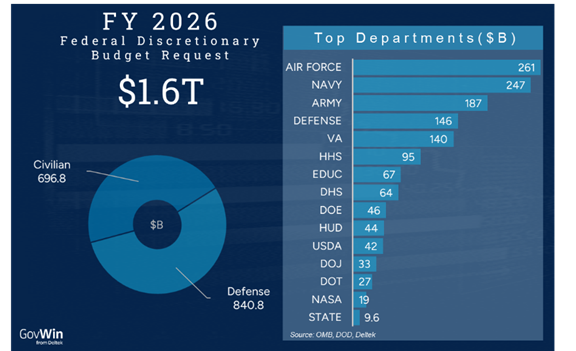
The Pentagon’s own stated topline is $961.6 billion. Secretary Hegseth told the Senate Armed Services Committee that’s the real number. Senator Angus King called him out for it, pointing out that splitting the budget between regular appropriations and a partisan reconciliation process was “fooling the American people about what the defense budget is.”
A trillion dollars a year. For a military that already dwarfs every other nation on the planet. Nobody asked, “how are we going to pay for it?” Nobody called it unrealistic. They just wrote the check.
A Billion Dollars a Day to Bomb Iran
Operation Epic Fury launched on February 28, 2026, without congressional authorization. The cost has been staggering.
The Pentagon briefed Congress that the first six days cost more than $11.3 billion. The Hill reported that the Pentagon burned through roughly $5.6 billion in munitions in just the first 48 hours. CSIS estimated the first 100 hours alone cost $3.7 billion and updated its 12-day estimate to $16.5 billion.

Kent Smetters, faculty director of the Penn Wharton Budget Model, told Fortune that if the conflict runs two months, it will inflict $65 billion in direct new costs on taxpayers, with total economic impact potentially reaching far higher. The Pentagon has not submitted a supplemental spending bill. None of this was budgeted.
Let me say that again: the federal government is spending roughly $1 billion a day on a war that the majority of Americans oppose, that Congress never authorized, and that was never included in any budget. And nobody on Capitol Hill is asking, “how are we going to pay for it?” They just let it happen.
The $300 Million Golf Tab (at His Own Resorts)
This one is smaller in dollar terms but arguably the most obscene in principle.
HuffPost’s analysis, based on a 2019 Government Accountability Office report, found that taxpayers had spent nearly $71 million on Trump’s golf trips by late November 2025. He visited golf clubs 88 times that year, roughly one out of every four days in office. He’s on pace to spend over $300 million on golf across his second term, nearly double the $151.5 million tab from his first.

Nearly all of these trips are to his own properties, meaning the public is directly enriching him. Each Mar-a-Lago trip costs $3.4 million in travel and security. The military flies motorcade vehicles in on C-17s. Coast Guard boats with mounted weapons patrol the waterways. Secret Service agents are reportedly charged up to 300% above standard rates at his properties. A Democratic House Oversight Committee report described his first term as “the world’s greatest get-rich-quick scheme.”
Three hundred million dollars of taxpayer money so the president can golf at resorts he personally profits from. But sure, tell me again that we can’t afford to give people health insurance.
Now Let’s Talk About Medicare for All
The most commonly cited estimates put the new federal cost of Medicare for All at roughly $3 to $4 trillion per year. Opponents love to wave that number around like it’s the end of the conversation. It’s actually the beginning.
The United States already spent $5.3 trillion on healthcare in 2024, according to CMS data published in Health Affairs. That’s $15,474 per person. CMS projects spending hits $5.6 trillion in 2025 and reach $8.6 trillion by 2033. Medicare for All doesn’t add $3 to $4 trillion on top of what we’re already spending. It replaces the existing patchwork of premiums, deductibles, copays, and out-of-pocket costs with a single, streamlined system. The question isn’t “can we afford Medicare for All?” The question is “can we afford to keep doing this?”
The evidence says no. And it says single-payer would actually save money.
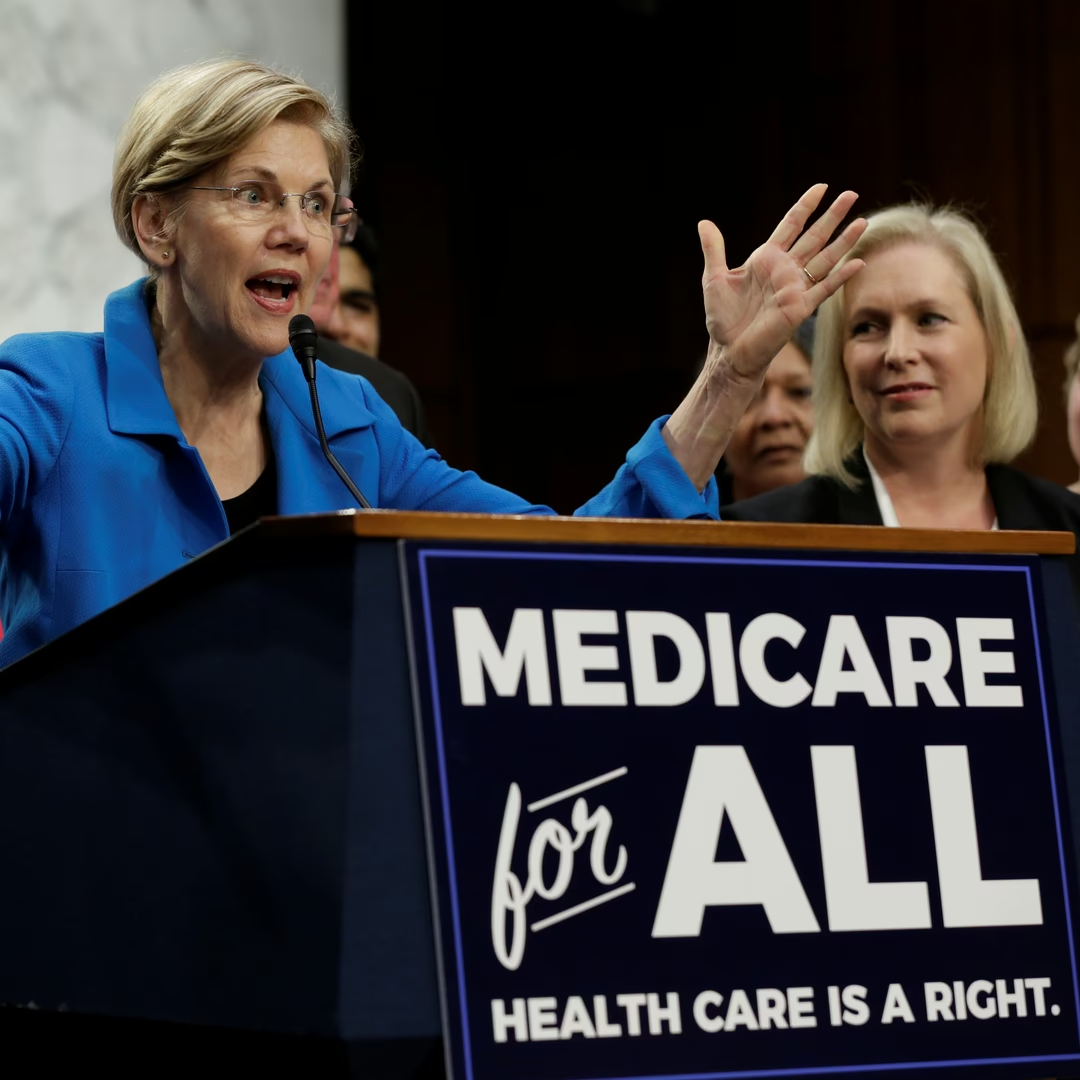
A team of epidemiologists led by Dr. Alison Galvani at the Yale School of Public Health published a landmark study in The Lancet in 2020 that found Medicare for All would reduce national healthcare expenditures by 13%, saving more than $450 billion annually, while preventing over 68,000 unnecessary deaths every year. The savings come from eliminating administrative waste, lowering drug prices, reducing fraud, and cutting out the insurance industry’s profit margins. As Newsweek reported, the average American family would save roughly $2,400 a year, with the greatest relief going to lower-income households.
And here’s the part that truly shuts down the “we can’t afford it” crowd: even the Koch brothers’ own think tank accidentally proved it saves money.
In 2018, the Mercatus Center at George Mason University (funded by the Koch network, with Charles Koch sitting on its board) published a study attempting to attack Medicare for All. Their own math showed it would reduce total national health expenditures by $2.054 trillion over ten years compared to the status quo. As Matt Bruenig at the People’s Policy Project pointed out, the U.S. could insure 30 million more Americans and virtually eliminate out-of-pocket costs while spending less overall. Bernie Sanders thanked the Koch brothers for the assist. The author of the study tried to walk it back, but the math was already out there.
A University of Massachusetts Amherst study estimated even larger savings: $5.1 trillion over a decade. Public Citizen’s fact sheet compiles the findings across multiple independent analyses, and the conclusion is consistent: every serious study that has modeled the economics of single-payer has found that it saves money. Not theoretical savings. Real, arithmetic, show-your-work savings.
It Was Never About Money
Let’s put the numbers side by side.
The federal government is spending over $1 trillion a year on the Pentagon. It’s spending approximately $1 billion a day on an unauthorized war in Iran. It’s on pace to spend $300 million this presidential term on golf trips to resorts the president personally owns. It spent $5.3 trillion on a healthcare system that left 27 million people uninsured and killed 68,000 people a year through lack of coverage.
And when someone proposes a system that would cover every American, save hundreds of billions a year, and prevent tens of thousands of deaths, the response from Washington is: “We can’t afford it.”
That’s not a fiscal argument. That’s not a budget constraint. That is a political choice about who deserves public money and who doesn’t. The money exists. It has always existed. It’s currently being spent on bombs, on golf carts, on insurance company profits, and on a healthcare bureaucracy so bloated that administrative costs alone eat up 13% of spending, compared to the 6% that Medicare for All would require.
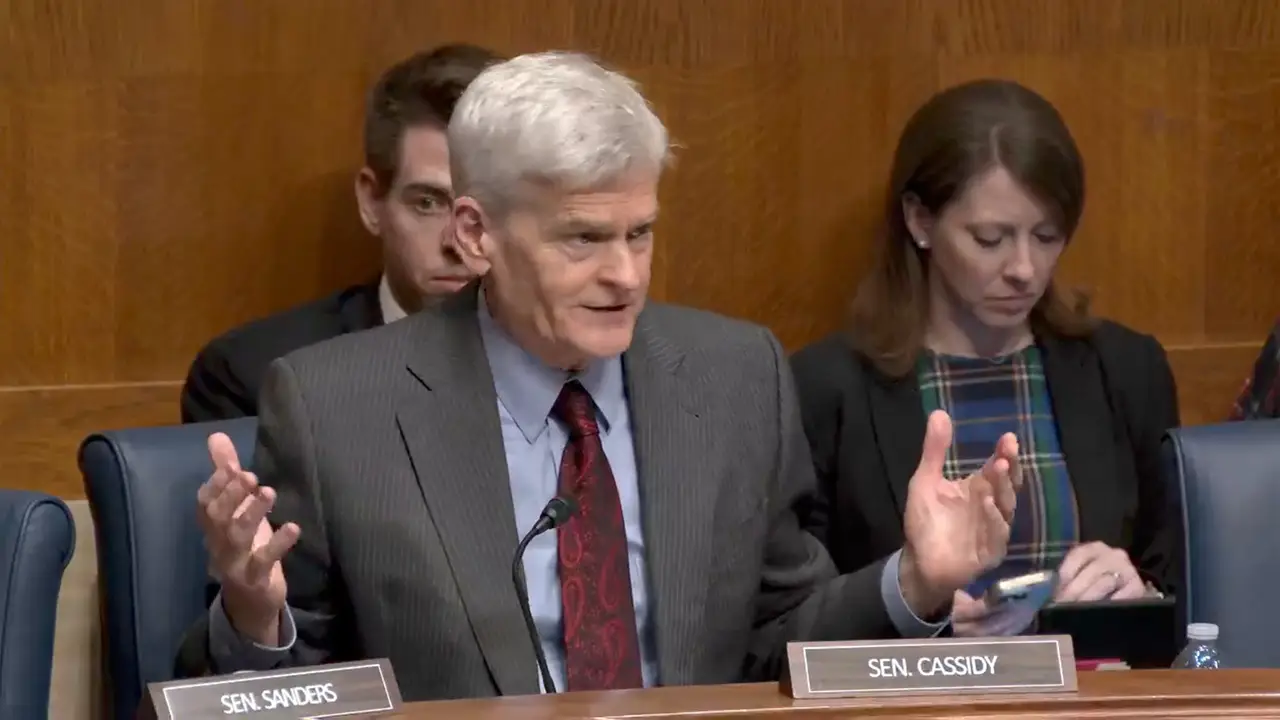
We don’t have an affordability problem. We have a priorities problem. And every politician who tells you otherwise is either lying to protect the industries that fund their campaigns or so captured by the status quo that they can’t imagine anything better.
Every other major country on earth figured this out. The UK, Canada, France, Germany, Japan, Australia. They all guarantee healthcare to their citizens and spend a fraction of what we do per person. And here’s the one that should really make your head explode: Israel has had universal healthcare since 1995. Every citizen is covered. On Bloomberg’s Health Care Efficiency Index, Israel ranked 6th out of 56 countries. The United States ranked 46th. We send Israel $3.8 billion a year in military aid while currently fighting an unauthorized war on their behalf, and they still manage to provide better, more efficient healthcare to every single one of their citizens than we do for ours. American taxpayers are bankrolling a country that guarantees its people healthcare while being told by their own government that they can’t have the same thing. We’re not special in some way that makes it impossible here. We’re just governed by people who’d rather write blank checks for someone else’s war than cover someone’s insulin (a drug that costs pennies to make).

The next time someone tells you Medicare for All is “too expensive,” ask them this: Too expensive compared to what? Compared to $5.3 trillion a year on a system that lets people die? Compared to a trillion-dollar military? Compared to a war nobody voted for? Compared to $3.8 billion a year in military aid to a country that already gives its own people universal healthcare? Compared to a flying motorcade to Mar-a-Lago so the president can shoot 18 holes?
The money is there. The math is solid. The only thing missing is the political will to stop letting people die for profit and political power.

Josh Schooley is a political journalist, LGBTQ+ activist, and founder of The Pulse Network. With nearly 20 years of political commentary and a background in business and accounting, he delivers fact-based analysis with a no-nonsense edge. He lives in Ohio with his family and writes on Threads and Substack.