Bribery, dark money, data centers, and rate hikes. Ohio’s energy crisis has a body count of careers and a price tag in the billions. And Sen. Husted was in the room the whole time.
As an Ohioan with a $700 electric bill this past January, and a $586 electric bill last month, I felt compelled to write this piece. So, if you live in Ohio like me, and your electric bill has been climbing, you’re NOT imagining things. And it’s not just inflation under the out-of-control Trump regime, either. It’s corruption, regulatory capture, corporate greed, and a data center gold rush that’s draining the grid while sticking YOU with the tab. These aren’t separate problems. They’re one connected story, and it leads straight from a $60 million bribery scheme to the desk of a sitting United States Senator who just testified under oath in a criminal trial.
This is the story of how FirstEnergy bought the Ohio Statehouse, how the man tasked with regulating them was on their payroll, how data centers are driving your electric bills through the roof, and how the people responsible keep getting promoted instead of prosecuted.
The Largest Bribery Scheme in Ohio History
Here’s what happened. FirstEnergy Corp. and its affiliates funneled approximately $60 million through dark money groups into a tax-exempt organization called Generation Now, which was controlled by Larry Householder. That money helped elect supportive legislators during the 2018 Ohio House elections, helped Householder become Speaker of the House in 2019, and then rammed through House Bill 6, a billion-dollar bailout of FirstEnergy’s failing Perry and Davis-Besse nuclear plants, plus subsidies for two 1950s-era coal plants. U.S. Attorney David M. DeVillers called it “likely the largest bribery, money laundering scheme ever perpetrated against the people of the state of Ohio.”
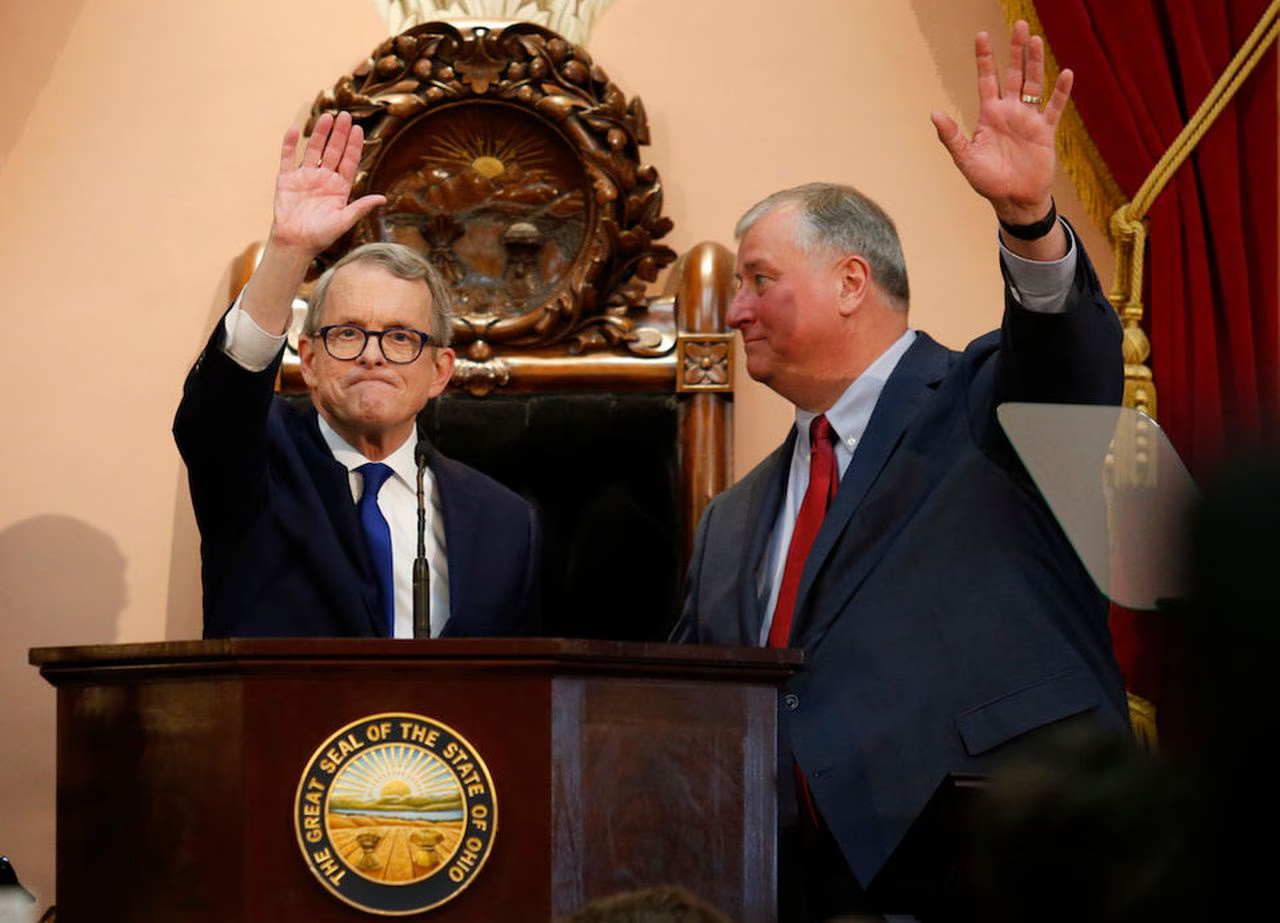
Governor Mike DeWine signed HB 6 into law on July 23, 2019. Federal agents arrested Householder and four associates on July 21, 2020.
Householder was convicted of racketeering conspiracy in March 2023 and sentenced to the maximum 20 years in federal prison. Former Ohio Republican Party Chairman Matt Borges got five years. And then there’s Sam Randazzo, the former Chairman of the Public Utilities Commission of Ohio, the agency literally tasked with protecting ratepayers. He accepted a $4.3 million bribe from FirstEnergy in exchange for regulatory favors. He was indicted, pleaded not guilty, and died by suicide on April 9, 2024.
Let that sink in. The man running the agency that was supposed to keep FirstEnergy in check was on FirstEnergy’s payroll to the tune of $4.3 million. And nobody caught it until the feds came knocking.
FirstEnergy admitted criminal liability in a 2021 court filing. It paid a $230 million federal penalty, a $100 million SEC settlement, and a $20 million settlement with the State of Ohio. In November 2025, the PUCO ordered three FirstEnergy utilities to pay $250.7 million for the scandal, including $180 million in refunds to customers (triple the bribe money) and $64.1 million in civil forfeitures.
And what did FirstEnergy recommend as its own punishment? In its own filing with the PUCO, it recommended the commission “forego punitive measures.” The company that bribed the Speaker of the House, bribed the PUCO chairman, and stole $450 million from customers earmarked for grid modernization asked for no further punishment. That takes a special kind of audacity.
What It Cost You
The nuclear subsidies portion of HB 6 was repealed in 2021. But the OVEC coal plant subsidies remained law until August 2025, when DeWine finally signed HB 15 eliminating them. During that period, Ohio utility customers propped up failing 1950s-era coal plants at a cost of over $445,000 per day. Common Cause Ohio estimates the total cost of OVEC subsidies paid by Ohio ratepayers exceeded $500 million. The prospective total cost of the entire scheme to consumers was estimated at over $2 billion.
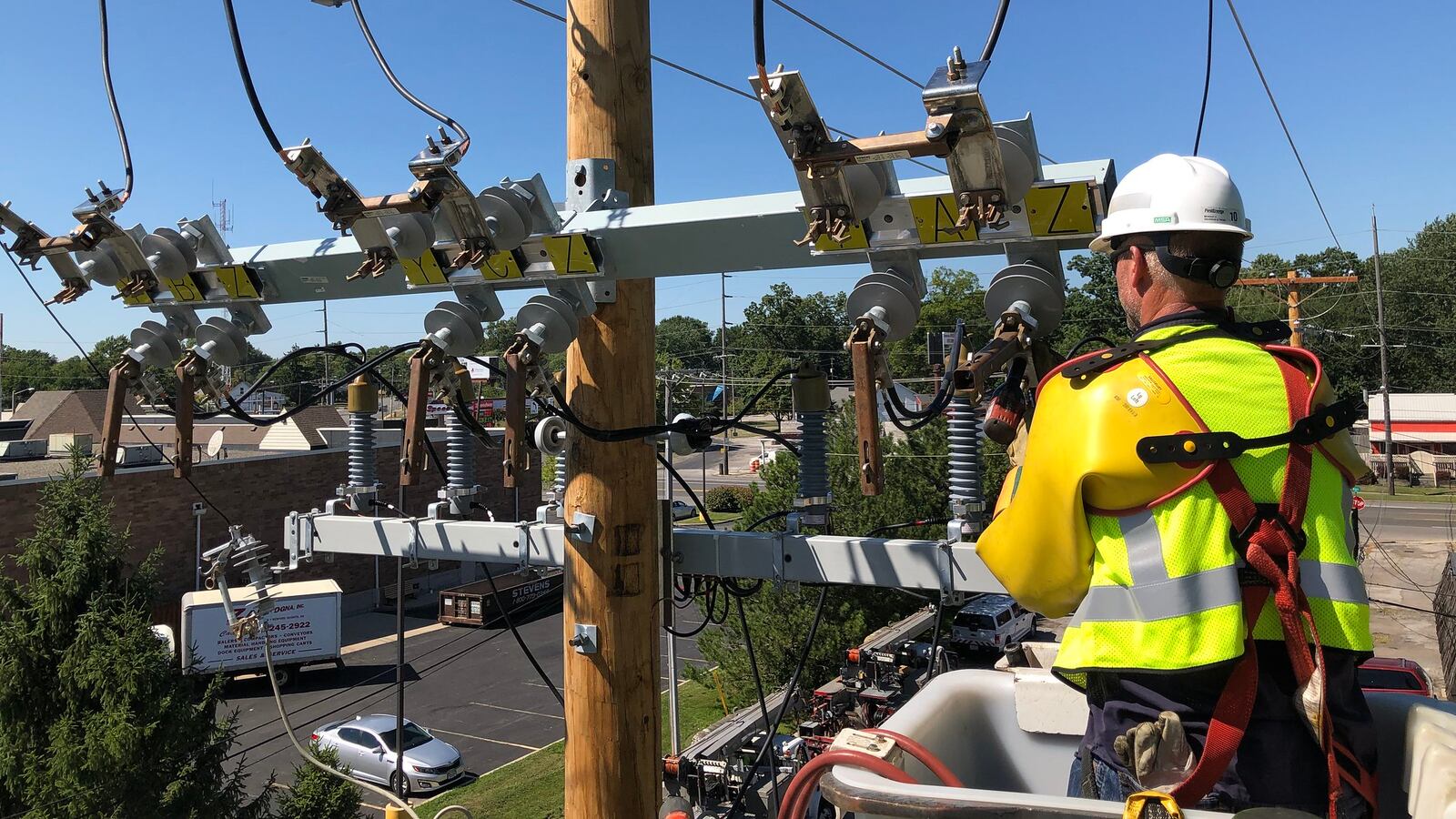
Oh, and FirstEnergy also collected more than $450 million from customers that was earmarked for modernizing the electric grid, without ever tracking how much was actually used for that purpose. They just took the money. Where it went is anyone’s guess, because FirstEnergy’s internal investigation of the scandal remains secret to this day.
HB 6 also gutted Ohio’s energy efficiency standards and renewable energy standards. That might seem like a footnote next to the bribery, but it’s not. It delayed the state’s entire energy transition, which means Ohio is now scrambling to build natural gas plants that won’t come online until 2029 to meet demand that’s already here. That delay was bought and paid for by FirstEnergy.
Now Let’s Talk About Senator Jon Husted
This is where it gets personal for every Ohioan, because the man at the center of this story is now a sitting United States Senator.
Investigative reporting by Floodlight and the Ohio Capital Journal found that FirstEnergy provided approximately $1 million in dark money to support Jon Husted’s political campaigns prior to the scandal being exposed. A FirstEnergy lobbyist, Neil Clark (who later died by suicide), dubbed Husted “FirstEnergy’s Golden Boy.”
Text messages released in 2024 show Husted allegedly leading the charge with FirstEnergy executives to pass HB 6. “Husted called me 2 nights ago and was supposed to get it in the Senate version,” then-CEO Chuck Jones texted Householder. When the Senate was holding up the bill, Jones texted: “Just had long convo with JHusted just now. Senate President called John twice during our two calls. All is well. JH is working on the 10 years.” A FirstEnergy email stated that Governor DeWine “left the details of H.B. 6 to others,” naming Husted and Dan McCarthy, DeWine’s legislative director who was a former FirstEnergy lobbyist.
Husted’s official calendar shows he met with individuals connected to HB 6 more than a dozen times during the bill’s lifecycle. He met with a man accused of bribery just two days before HB 6 was introduced. Call logs show dozens of conversations between Husted, Randazzo, and FirstEnergy leadership.
Husted was subpoenaed in a civil case related to the scandal and was set to give a sworn deposition. Then, on March 11, 2026, he testified remotely as a defense witness in the criminal trial of former FirstEnergy CEO Chuck Jones and former Senior VP Michael Dowling, who face 11 felony charges, including racketeering, bribery, and conspiracy. Husted claimed he couldn’t remember what was discussed at a 2018 dinner with the FirstEnergy executives. When the prosecutor asked if he’d want anyone involved in compromising the PUCO chairman to be held accountable, the defense immediately objected.
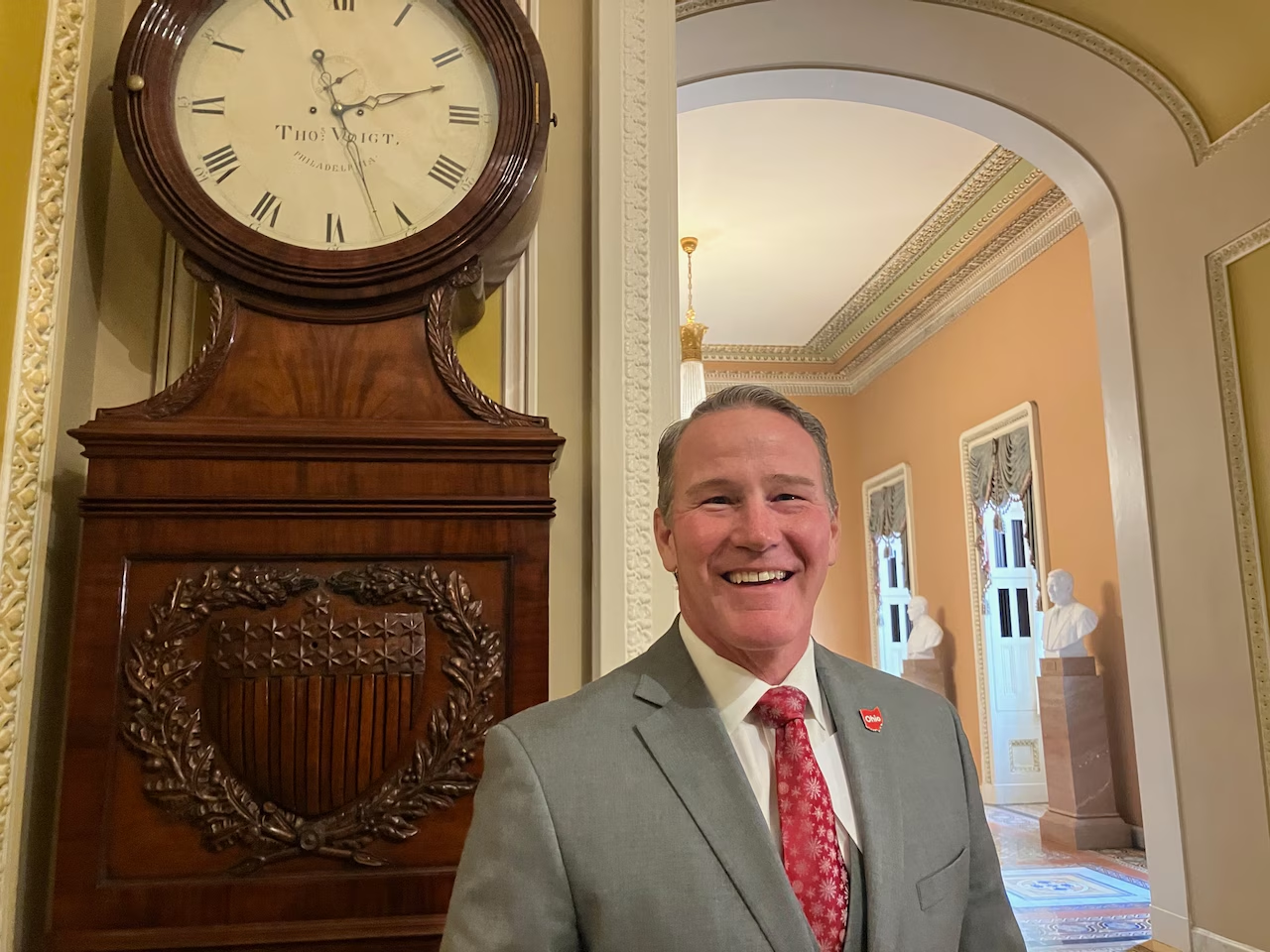
Husted has not been charged with any crime. He denies meaningful involvement. When confronted with the text messages in 2024, he told reporters, “I don’t know what you’re talking about; we weren’t involved.” When asked in 2022 what role he played, he said: “none.” The text messages say otherwise.
He is now running in a 2026 special election to keep the Senate seat he was appointed to. His opponent? Sherrod Brown. Democrats have signaled the HB 6 scandal will be a central campaign issue. It should be. Since HB 6 took effect, the average Ohio residential electric bill has risen from $1,070 per year to $1,734 per year. That’s an increase of $663 per household, per year. And Husted allegedly helped make it happen for a company that was simultaneously funding his political career.
The Rate Shock Nobody Warned You About
Even if you’ve tuned out the corruption, you’ve felt this part. Ohio electricity rates spiked dramatically in 2025, and they’re not done climbing.
The primary driver is the PJM Interconnection capacity auction system. PJM manages the grid for Ohio and 12 other states, and it holds annual auctions to ensure enough power is available. In 2025, those auction prices surged 833% compared to the previous year, jumping from $28.92 per megawatt-day to $269.92. That’s not a typo. Eight hundred and thirty-three percent.
The impact on your bill was immediate. Residential consumers saw 10 to 15% increases. Business owners got hit with increases up to 29%. AEP Ohio customers saw rates jump as much as 36%. In July 2025, the average residential electricity bill in Ohio was 23.3% higher than the previous year, the third-largest increase in the country.
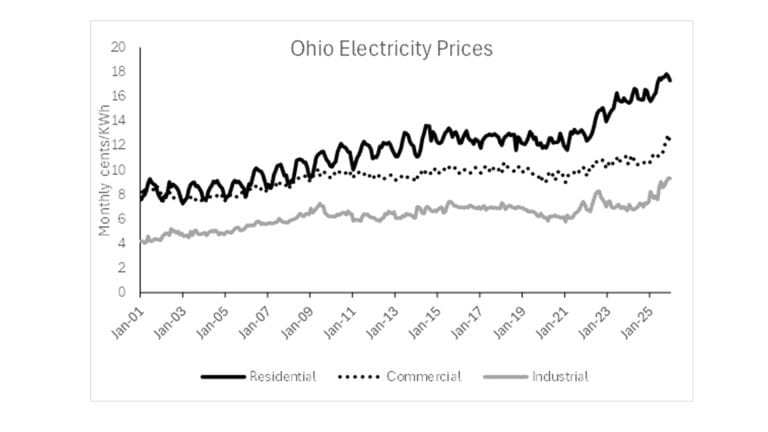
And while your bill was climbing, AEP was doing just fine. AEP’s own earnings report shows full-year 2025 GAAP earnings of $3.58 billion, up from $2.97 billion in 2024. That’s a 20% increase in profits, a $610 million jump, in the same year Ohio households saw the third-largest electric bill increase in the country. Revenue through the first nine months of 2025 was up $1.54 billion. They announced a $72 billion capital plan. They’re projecting 7 to 9% earnings growth for the next five years. Your rates went up 23%. Their profits went up 20%. They’re not passing along costs. They’re basically just printing money.
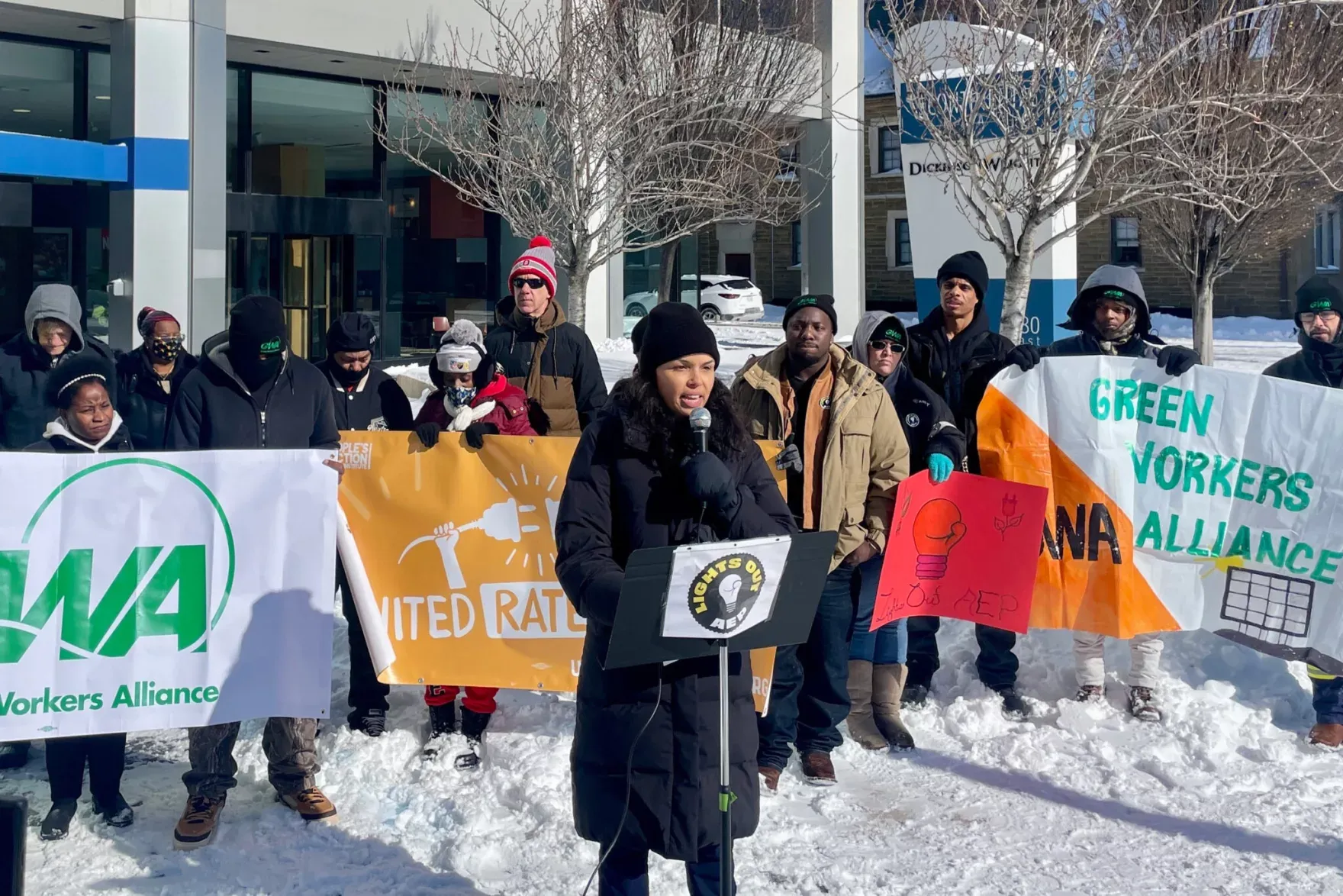
And it’s not over. FirstEnergy requested another round of rate increases in October 2025. AEP Ohio filed to generate more than $400 million in new revenue. The July 2025 capacity auction for 2026-2027 went all the way to the $329/MW-day cap imposed by courts after Pennsylvania Governor Josh Shapiro sued PJM. If that cap expires, PJM reverts to its default cap of $500/MW-day. Let that number rattle around in your head for a minute. (I know, this is a lot. Imagine how I feel having to research, outline, and write this! LOL!)
The Data Center Grift
Here’s the part almost nobody is talking about: the reason the capacity auction prices exploded is largely because of data centers. And Ohio rolled out the red carpet for them.
There are 185 data centers in Ohio, 117 of them in Central Ohio. AEP Ohio has received requests for 30 gigawatts of electric connections from data centers alone. Individual data centers now consume 600 megawatts or more. Ohio utilities forecast that data center demand could expand to 5,000 megawatts by 2030.
CNBC reported that consumers served by PJM will pay $16.6 billion to secure power supplies just to meet data center demand from 2025 through 2027. About 90% of that ($15 billion) is specifically for future data center demand. PJM’s own independent market monitor, Monitoring Analytics, called this a “massive wealth transfer” from consumers to the data center industry. Updated figures put the total at $23 billion attributable to data centers across three consecutive auctions.
Read that again. You are paying billions of dollars TODAY for data center demand that may not fully materialize TOMORROW. And the companies requesting all this power (Amazon, Google, Meta, Microsoft) got massive tax breaks from state and local leaders to set up shop in Ohio in the first place, while providing exactly nothing of substance to everyday Ohioans.

The Ohio Manufacturers’ Association challenged AEP’s demand forecasts, stating: “Until forecasts are independently reviewed and verified, instead of based on unvetted assumptions, Ohioans are being asked to fund infrastructure for a future that exists on paper, not on the grid.” Ohio Consumers’ Counsel Maureen Willis said: “Overestimating future demand risks saddling consumers with unaffordable and unnecessary costs.”
It takes far longer to build new power plants than to propose new data centers. The natural gas plants being fast-tracked through PJM aren’t expected online until 2029. In the meantime, communities are starting to fight back. Jerome Township outside Columbus became the first local government to impose a moratorium on data centers in September 2025. Lordstown and Washington Township followed. Township meetings about data centers are standing room only.
Goldman Sachs projects that electricity prices will continue rising through the end of the decade, with data centers driving 40% of demand growth. Families won’t see relief anytime soon. And the income drag will hit lower-income households hardest because electricity makes up a larger share of their spending.
Connecting the dots
These aren’t separate stories. They’re one story.
FirstEnergy bribed its way to a billion-dollar bailout that cost Ohioans over $500 million and gutted the state’s renewable energy and efficiency standards. That gutting delayed Ohio’s energy transition, which means the state lacks the clean generation capacity it desperately needs now. The PUCO, the agency that was supposed to protect ratepayers, had its chairman on FirstEnergy’s payroll. The sitting U.S. Senator representing Ohio allegedly helped drive the bill through the legislature while the company was funding his career with dark money.
Meanwhile, Ohio handed out massive tax breaks to attract data centers from Amazon, Google, and Meta, driving an explosion in electricity demand that the existing grid cannot support. That demand is the primary driver of the capacity auction price explosions now hitting every Ohio ratepayer’s bill. The auction system means Ohioans are paying today for data center demand tomorrow, demand that may never fully materialize. PJM’s own watchdog calls it a massive wealth transfer.
And the recommended consequence from the company that started it all? “Forego punitive measures.”
Your electric bill is $663 higher per year than it was when HB 6 took effect. The people who made that happen are either in prison, dead, on trial, or running for re-election. The company that orchestrated it all is still your power producer. And the data center industry is layering a whole new cost structure on top of the wreckage.
Republicans have controlled the Ohio Statehouse for the better part of 30 years. They’ve held the Ohio House since 1995, the Senate since 1985, and the governor’s mansion for all but four of the last 34 years. In that time, they delivered the largest bribery scandal in state history, a compromised utility regulator, gutted clean energy standards, massive tax breaks for data centers that are now devouring the grid, and electric bills that have climbed $663 per household since HB 6 took effect. Every anti-corruption bill introduced by Ohio Democrats since the scandal has gone nowhere in the GOP-dominated legislature. Republican leaders said reform was outside their authority. They had the authority to pass the bribe. They just don’t have the authority to clean it up. That’s 30 years of one-party rule. That’s the result.

Full disclosure: I reached out to Dr. Amy Acton’s campaign on Threads to discuss this story and the broader energy crisis facing Ohio families. I didn’t get a response — not to the thread, no DM… nothing. I get it, campaigns are busy. But if you’re running for governor on affordability and corruption, and an independent media creator with a progressive platform wants to help you amplify that message to thousands of engaged readers, maybe reply. Just saying.
This isn’t a policy or party debate. It’s a crime scene. And Ohio residents are the ones left holding the bill.

Josh Schooley is a political journalist, LGBTQ+ activist, and founder of The Pulse Network. With nearly 20 years of political commentary and a background in business and accounting, he delivers fact-based analysis with a no-nonsense edge. He lives in Ohio with his family and writes on Threads and Substack.