A relic of 1787 gives rural white voters more power than millions of urban Americans. It’s time to end it.
The Electoral College was not a neutral invention. It was born in 1787 out of compromise, yes, but also out of racism. At the Constitutional Convention, southern slaveholding states feared being outvoted by northern states in a direct popular election. Their populations were smaller if you counted only free citizens, but the infamous Three-Fifths Compromise allowed them to count enslaved people, who had no rights and no voice, toward their representation in Congress. That inflated their electoral votes and gave them disproportionate power in presidential elections. In other words, the Electoral College was designed to protect slavery and to amplify the political power of white landowners.
That racial distortion did not end with emancipation. For generations, Jim Crow laws, poll taxes, literacy tests, and violence kept Black Americans from voting, while the Electoral College continued to magnify the influence of states that had perfected voter suppression. Even today, the system gives outsized weight to smaller, rural, and disproportionately white states, while diluting the votes of more diverse, urban populations. A ballot cast in Wyoming counts nearly four times as much as a ballot cast in California. That imbalance is not accidental; it is the modern echo of a system built to protect white political dominance.
Defenders of the Electoral College often claim it ensures that small states are not ignored. But in practice, it ensures that diverse states are discounted. Candidates do not campaign in Mississippi or California, where millions of Black, Latino, and Asian American voters live. They campaign in Pennsylvania, Michigan, and Arizona, where narrow margins among white swing voters decide the outcome. The system does not give everyone a voice; it privileges some voices over others, and those voices are overwhelmingly white and rural.
In 2025, this is indefensible. The United States is a multiracial democracy. Most Americans live in metropolitan areas. Our politics, our culture, and our economy are shaped by diversity. Yet the Electoral College continues to privilege a shrinking minority at the expense of the majority. It is not just outdated, it is structurally racist.
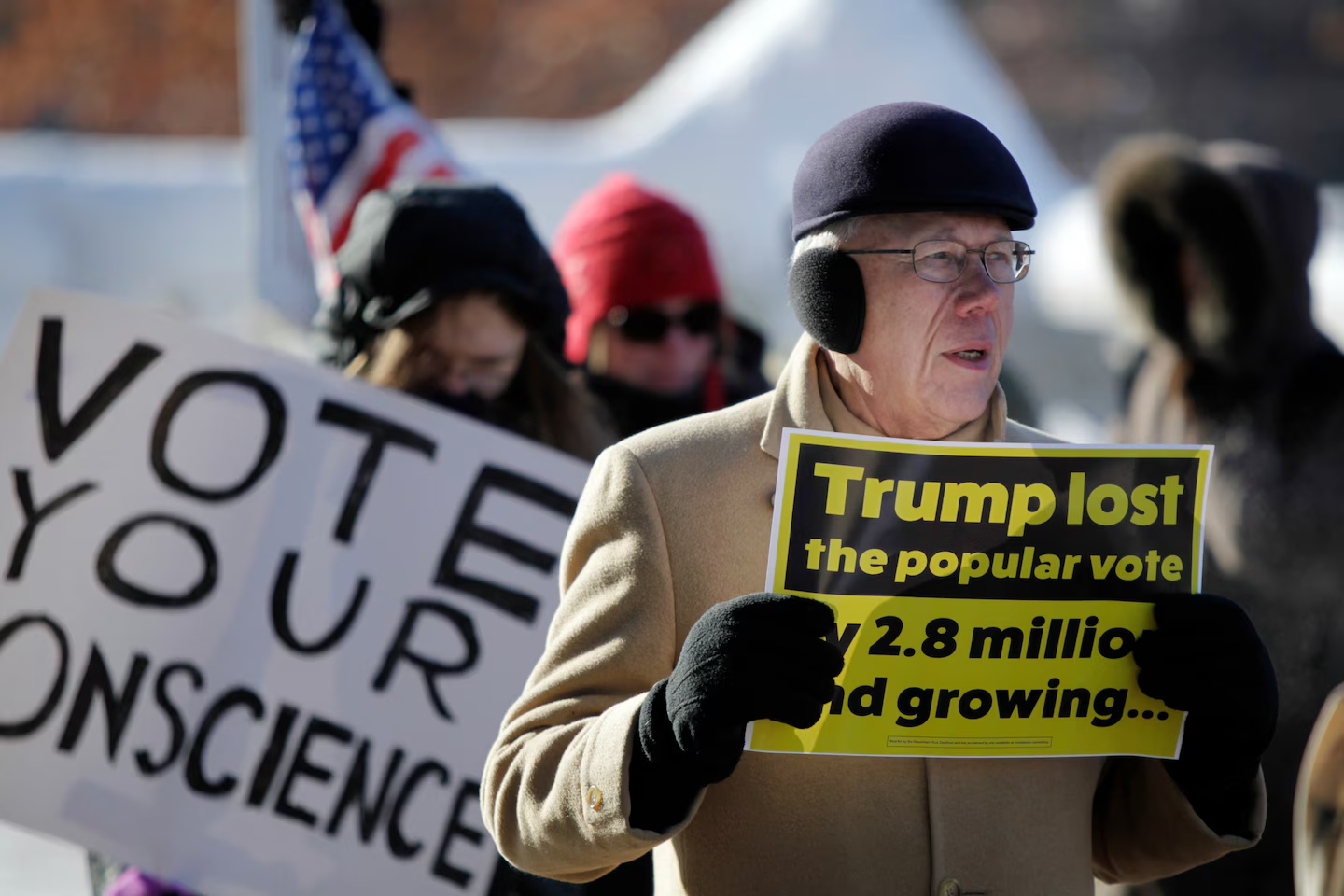
Twice in the last quarter century, the candidate who won the popular vote lost the presidency. Both times, the Electoral College overruled the will of a more diverse national electorate in favor of narrower margins in whiter, less populated states. That is not democracy. It is a distortion rooted in a system designed to protect slavery and perpetuated to maintain racial hierarchy.
Abolishing the Electoral College would not erase differences between states. It would not silence rural voices. It would simply ensure that every vote counts equally, no matter the color of the voter’s skin or the size of the state they live in. The presidency should be decided by the people directly, not by an 18th-century compromise that was built on the backs of enslaved people and still tilts power toward a whiter minority.
If we believe in one person, one vote, then we must confront the truth: the Electoral College is not just outdated. It is racist in origin, racist in effect, and incompatible with a fair democracy in 2025.

Josh Schooley is a seasoned accountant and business management professional with over 25 years of experience, but his passion for truth and transparency extends far beyond numbers. As the founder of The Pulse Network, Josh has built a reputation for delivering fact-based political analysis and cutting through misinformation in an era of spin.
A proud husband, father, and grandfather, Josh uses his platform to advocate for LGBTQ+ rights, social justice, and progressive policies. His presence on Threads has become a hub for sharp political commentary, where he engages with thousands of followers, exposing hypocrisy and holding leaders accountable.
Josh’s work has resonated with readers who seek clarity, honesty, and a no-nonsense approach to politics. Whether he’s dissecting the latest policy shifts or calling out political corruption, his voice remains a powerful force in the fight for democracy and equality.