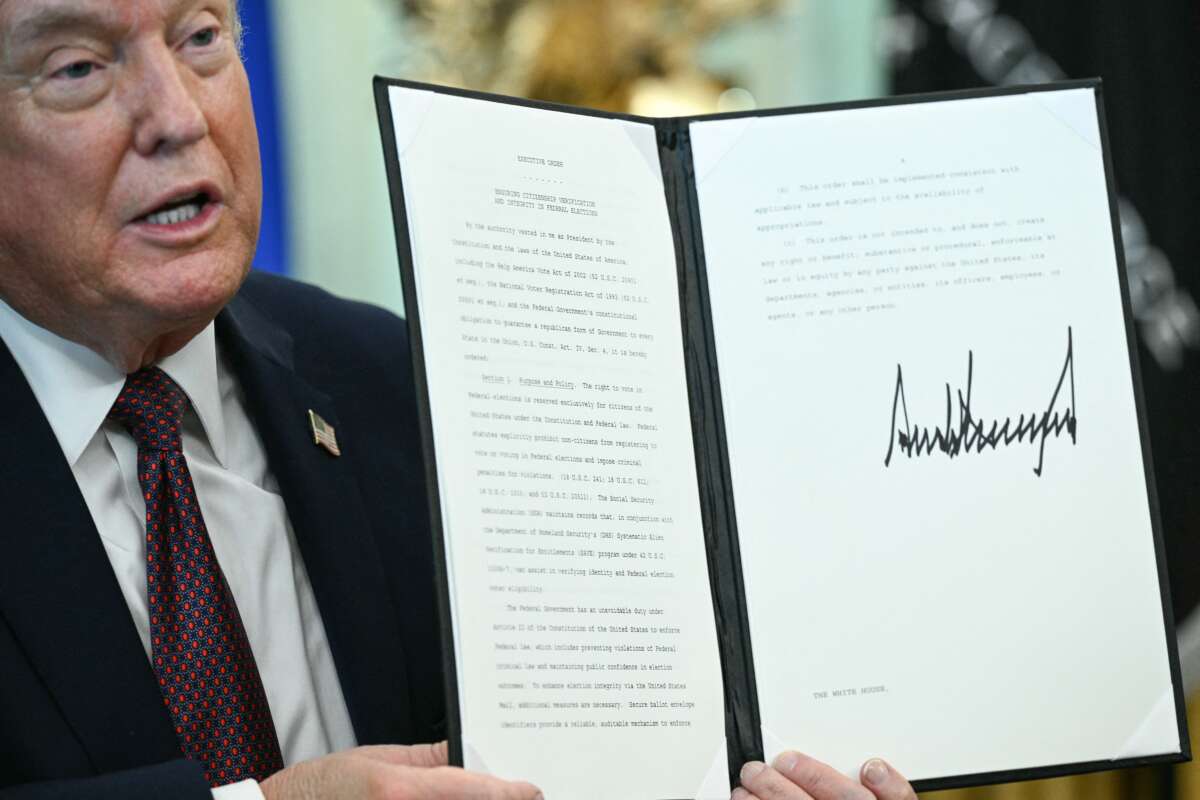
Wiles saw the disaster coming and didn’t stop it. Now she’s scrambling to manage war messaging, spiking gas prices, and a midterm strategy in ruins.
Ten days ago, Susie Wiles had a plan. It was a good plan, the kind that wins midterms: hammer affordability, stay on message, keep Donald Trump’s attention on grocery prices and gas pumps, and let the Democrats flail. She’d spent months building it out. CNN reported that Wiles had been focused on political matters, plotting a midterm push centered on domestic priorities she worried had been overshadowed by Trump’s foreign policy adventures. That was the job. That was the whole damn job.
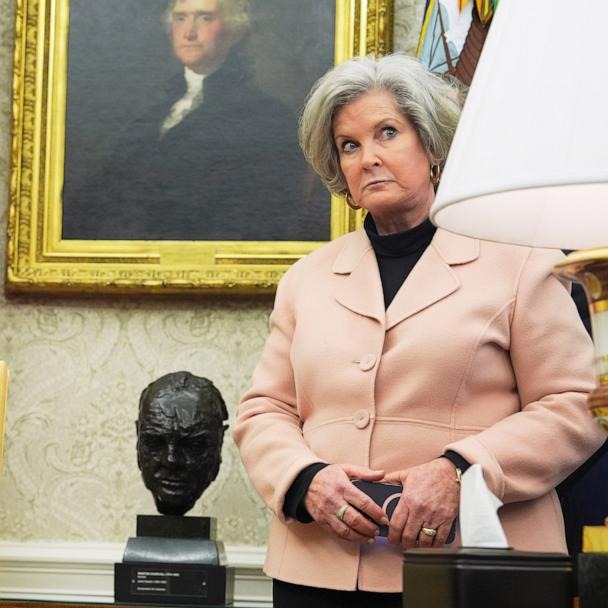
Then, on February 28, her boss launched Operation Epic Fury, a joint U.S.-Israeli bombing campaign against Iran that killed Supreme Leader Ali Khamenei, leveled government buildings, hit schools and hospitals, and set the entire Middle East on fire. And just like that, the midterm strategy went up in smoke right alongside the Grand Bazaar in Tehran.
Now Wiles is doing damage control. Not the kind where you spin a bad news cycle. The kind where you stand at Dover Air Force Base next to Pete Hegseth and Pam Bondi and Tulsi Gabbard, watching six flag-draped transfer cases come off a C-17, and then fly back to Washington to scream at cabinet secretaries about the price of unleaded. That’s where we are. That’s the presidency now.
They All Had Doubts. None of Them Mattered.
Here’s what the reporting actually tells us about the lead-up to this war, and it’s damning: almost nobody in Trump’s inner circle thought this was a good idea at the outset.
According to CNN’s deeply reported March 8 piece, Vice President JD Vance (the former anti-war Marine who built his entire political brand on opposing exactly this kind of thing) initially counseled against the perils of launching another unpredictable Middle East conflict. Secretary of State Marco Rubio, already juggling the aftermath of January’s Venezuela operation, offered only lukewarm support. Chairman of the Joint Chiefs Gen. Dan Caine laid out the potential negative consequences. And Wiles? She was focused on the midterms.

But here’s the part that should make your blood boil: none of them fought it. As CNN put it, once they came to see war as inevitable, they spent their energy racing to execute Trump’s wishes rather than trying to change them. Curt Mills of The American Conservative nailed the dynamic. This is not a “team of rivals” White House. Nobody is having an honest internal debate. The president decides, and everyone salutes.
Vance’s pivot was especially grotesque. He went from cautioning against war to arguing Trump should strike fast and hard. Now he’s on Fox News insisting the conflict won’t become a multi-year quagmire, even as he admits it could go on for quite a while. He’s gambling his 2028 presidential ambitions on a quick win in a region that hasn’t produced a quick win for any American president in living memory.
Rubio, meanwhile, stepped into it within days of the war starting, suggesting Israel led the U.S. into the strikes, then walking it back the next day after Trump publicly disagreed. If you want to understand the power dynamics here, that’s your answer: Rubio accidentally told the truth and had to retract it within 24 hours.
Screaming at the Walls About Gas Prices
This is where Wiles goes from tragic figure to case study in political self-immolation.
Politico reported on March 5 that Wiles is telling Trump’s advisers to bring ideas to the Oval Office to lower gasoline prices. The sourcing comes from two energy industry executives familiar with the conversations. The White House is “looking under every rock” for solutions. Energy Secretary Chris Wright and Interior Secretary Doug Burgum’s national energy council are reportedly getting hammered for positive developments on price relief.
Let’s talk about what those prices actually look like. AAA reported the national average jumped nearly 27 cents in a single week to $3.25 as of March 5. By March 8, it had climbed to $3.45, a 16% spike in one week. In Ohio, prices jumped from $2.87 to $3.28 in days. California’s already at $5.16 a gallon. And prediction markets are placing 63% odds that prices hit $4.50 by the end of March.
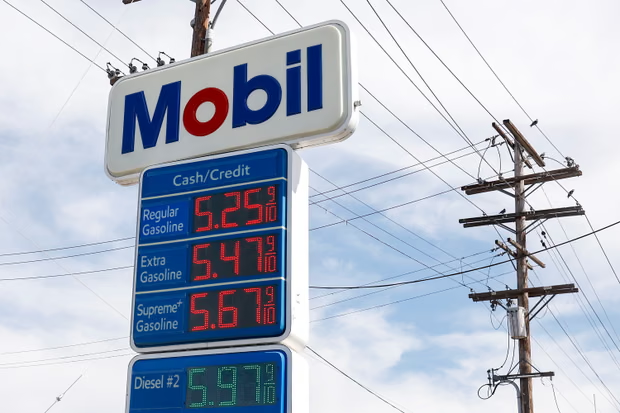
The largest single-day gas price spike since Russia invaded Ukraine. That’s the benchmark. Axios confirmed that the 11-cent overnight jump on March 4 was the biggest since March 2022. And analysts at RBC Capital Markets are warning this could become the worst energy crisis since the 1970s oil embargo if the Strait of Hormuz stays closed.
The White House response has been a masterclass in incoherence. Press Secretary Karoline Leavitt told the Daily Beast that “nobody is panicking,” accusing Politico of writing sensationalist gossip. Meanwhile, an administration source told Politico that the faction of the White House that would care about $80 to $90 oil had been silenced, that louder voices pushing for war had won out. Energy Secretary Wright called the price spike a “transient bump” and a “small price to pay.” Trump himself? “If they rise, they rise.”
If they rise, they rise. The man who ran on affordability, who bragged about $2 gas at his State of the Union address just days before the war, now shrugs. And his chief of staff is left trying to un-ring a bell that she reportedly saw coming and didn’t stop.
Six Coffins at Dover
On March 7, the bodies of six American soldiers came home to Dover Air Force Base in Delaware. CNN confirmed that Defense Secretary Hegseth, AG Pam Bondi, DNI Tulsi Gabbard, and Susie Wiles were all present for the dignified transfer. Trump was there too, wearing a white-and-gold “USA” baseball cap (available for $55 on his merch site) as flag-draped transfer cases were carried past him. He did not remove it. Governor Gavin Newsom called him a “disgusting little man.” Former RNC Chair Michael Steele told him to take the damn hat off. Trump addressed it from Air Force One afterward, saying the parents “were so proud.”
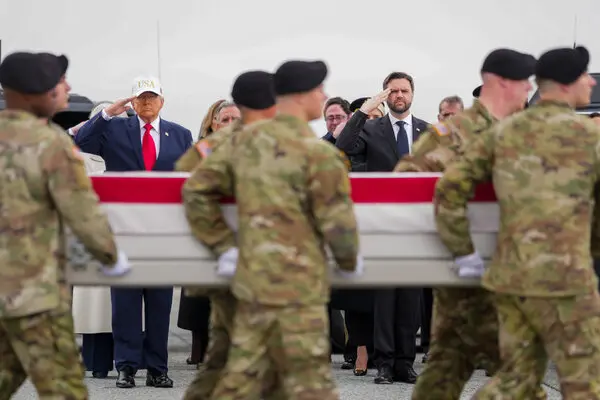
Then Fox News did what Fox News does. On Sunday morning, Fox & Friends aired footage of Trump at a different dignified transfer from December 2025, one where he wasn’t wearing a hat, and labeled it as Saturday’s ceremony. They ran the old footage on at least two separate broadcasts. After getting caught (the X account Bad Fox Graphics flagged it first), anchor Griff Jenkins issued an on-air correction, and the network released a statement calling it an inadvertent error. As journalist Mehdi Hasan put it: if any other network did this, it would be a huge scandal, and people would lose their jobs.
The six soldiers (Sgt. 1st Class Cody Khork, Sgt. 1st Class Noah Tietjens, Sgt. 1st Class Nicole Amor, Spc. Declan Coady, Maj. Jeffrey O’Brien, and CW3 Robert Marzan) were all assigned to the 103rd Sustainment Command, an Army Reserve unit out of Iowa. They were killed by an Iranian drone strike in Kuwait on February 28.
Wiles was there. She stood on that tarmac and watched those transfer cases come off the plane while her boss couldn’t be bothered to take off a baseball cap. This is the woman who was planning a domestic messaging strategy eight weeks ago. She didn’t want this war. The reporting is clear on that. But she didn’t stop it, either. And now she’s standing at Dover.
Congress Voted to Do Nothing
If you were hoping the legislative branch might serve as a check on this, you can stop hoping.
Sen. Tim Kaine forced a vote on a War Powers Resolution on March 4 to halt unauthorized military action in Iran. It failed 47 to 53 in the Senate, with Rand Paul as the sole Republican vote in favor and John Fetterman as the sole Democrat voting against. The next day, the House rejected its version 212 to 219, largely along party lines, with only two Republicans crossing over and four Democrats voting with the GOP.

This is the eighth war powers vote Congress has taken since June. All eight have failed. The Constitution says Congress declares war. Congress has functionally declared that it doesn’t want to. As one Middle East Institute fellow told PBS, our political system is largely broken. Congress is not exercising its constitutional responsibilities in any appreciable way.
And Speaker Mike Johnson had the gall to call the war powers resolution a “dangerous idea” that would “empower our enemies.” You know what empowers our enemies? Starting a war without a plan, without authorization, and without the support of the majority of the American public.
The American People Don’t Want This
The polling on this war is brutal, and it should terrify anyone in Wiles’ position who cares about November.
The NPR/PBS News/Marist poll from March 2 through 4 found that 56% of Americans oppose U.S. military action in Iran. Only 36% approve of how Trump is handling the situation, down from 42% during the Soleimani crisis in 2020. Among independents, 59% disapprove. Among voters 18 to 29? Approval sits at just 25%.
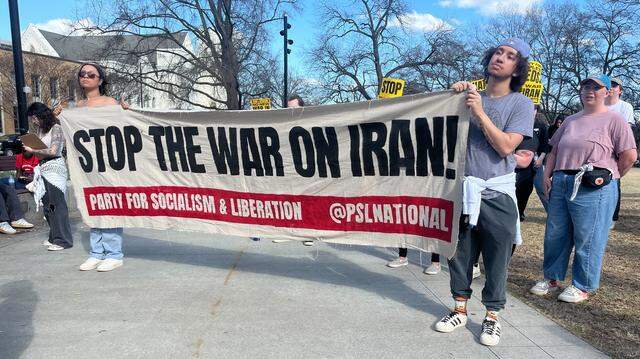
A CNN/SSRS poll found 59% overall disapproval of the strikes. And here’s the number that should keep Wiles up at night: even among Republicans, the support isn’t rock-solid. Only 37% of Republicans “strongly” approved in the CNN survey. Forty-six percent of Republicans said they trust Trump only “moderately” or less on Iran decisions. And in a Reuters/Ipsos poll, 42% of Republicans said U.S. troop casualties would make them more likely to oppose the mission. Thirty-four percent said rising gas prices would do the same.
We already have troop casualties. Gas prices are already spiking. Both of the triggers that erode Republican support are in play simultaneously, and we’re not even two weeks in.
Trump’s response to the polling? Vintage delusion. He told reporters he thinks it’s a “silent majority” situation. TIME reported him saying that if you did a “real poll,” people are actually very impressed. This is the man with his finger on the button, folks. He’s citing imaginary polls to justify a war the real ones say nobody wants.
The Pentagon’s Math Problem
Behind the White House messaging chaos is a harder reality: the Pentagon is worried about running out of the weapons it needs.
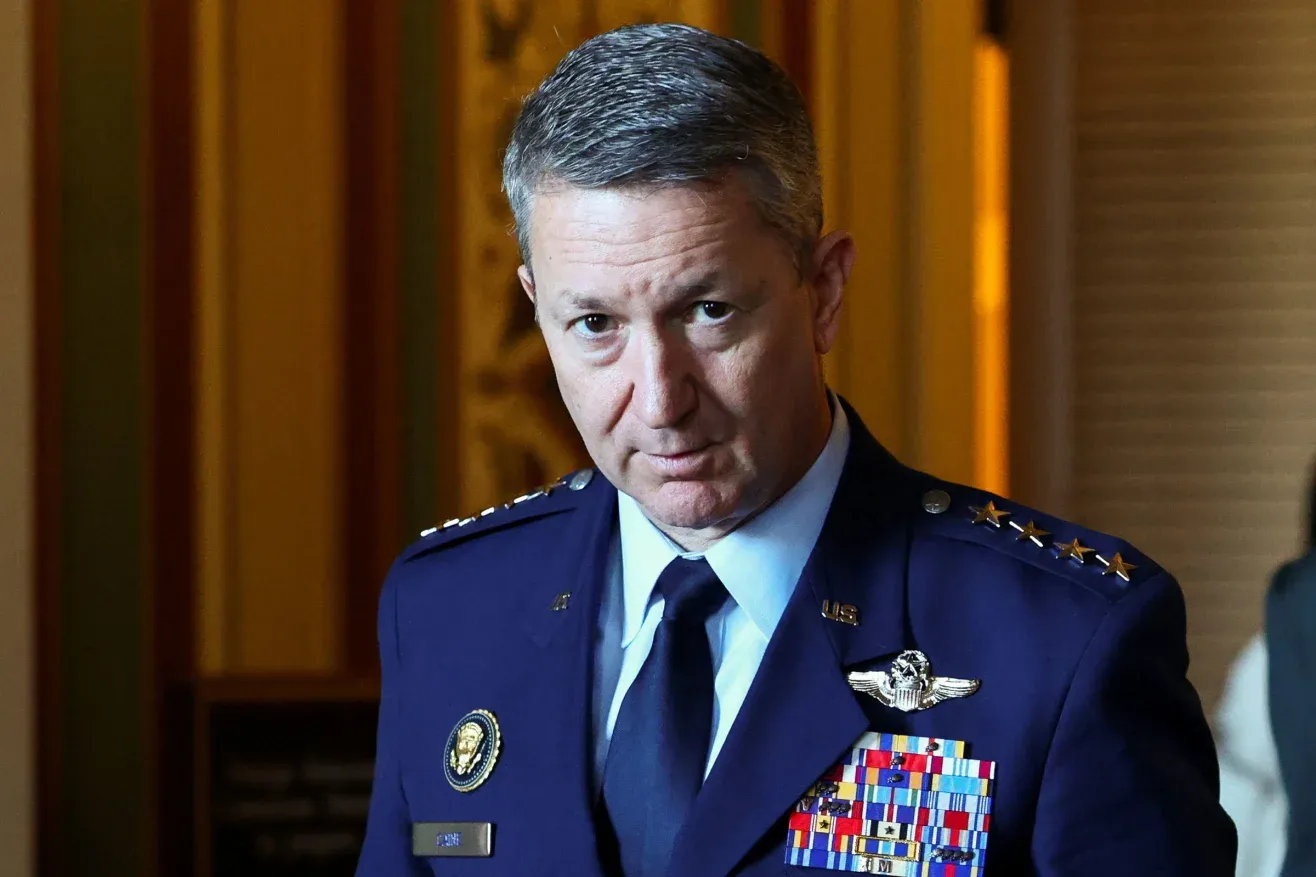
The Hill reported that Gen. Caine had warned Trump before the operation that a major campaign against Iran would face challenges from depleted U.S. stockpiles. The concern centers on high-end interceptors (THAAD, Patriot, SM-3), the expensive stuff that takes years to replace. Rubio himself acknowledged the math problem, noting that Iran can produce over 100 missiles a month compared to six or seven U.S. interceptors in the same timeframe.
Sen. Mark Warner said American supplies are dwindling after fighting the Houthis, engaging in seven different military conflicts under this administration, and burning through stockpiles that were already depleted by the Ukraine situation. NBC reported that the administration is discussing invoking the Defense Production Act to force defense contractors to accelerate production. Trump posted that Lockheed Martin agreed to quadruple munitions output, but offered zero timeline for when that would actually happen.
Trump’s public position? The U.S. has a “virtually unlimited supply” of weapons and can fight “forever.” In the same breath, he admitted that at the “highest end,” stockpiles are “not where we want to be.” The Pentagon is now switching from advanced standoff munitions to cheaper gravity bombs, the kind that require pilots to fly closer to enemy territory, because they’re burning through the good stuff too fast.
Hegseth told reporters the war could last six to eight weeks. Then he said it had “only just begun.” Antiwar.com reported the Pentagon is preparing for the possibility that it lasts through September. White House press secretary Leavitt initially projected four to six weeks. An internal Pentagon memo obtained by Politico suggests it could last months. Meanwhile, just today, Trump told CBS News’ Weijia Jiang: “I think the war is very complete, pretty much. They have no navy, no communications, they’ve got no Air Force. Their missiles are down to a scatter.”
Nobody seems to be on the same page about how long Americans should expect to be at war. There’s no coming relief for the pain at the pump. Consumer goods will skyrocket even more as increased fuel prices get passed on to consumers. Farmers will have trouble sourcing affordable fertilizer just at the beginning of the season. The stock market will continue to tank as uncertainty plagues world financial markets, and people will see it reflected in thier 401k’s. So much “winning”, right?
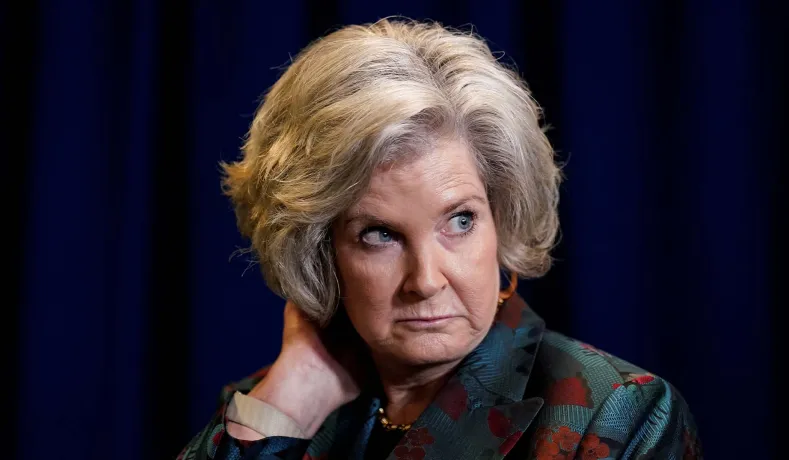
This is what happens when you work for Donald Trump. It doesn’t matter how smart you are. It doesn’t matter how carefully you planned. Netanyahu wanted a war, and Trump wanted people to ignore the Epstein files, so we’re in a war. And now the fixer’s job isn’t fixing. It’s absorbing the blast.
Poor Susie. She’s in the White House, making calls, still trying to find some angle that makes “we killed the Supreme Leader, and now gas is five bucks” sound like a winning midterm message to voters.
Good luck with that, Susie. LOL!

Josh Schooley is a political journalist, LGBTQ+ activist, and founder of The Pulse Network. With nearly 20 years of political commentary and a background in business and accounting, he delivers fact-based analysis with a no-nonsense edge. He lives in Ohio with his family and writes on Threads and Substack.